The Wine-Dark Sea: Sailing the Greek Islands Homer Described

The Wine-Dark Sea: Sailing the Greek Islands Homer Described

Sarah Mitchell

Sarah Mitchell

September 8, 2026

6 min read· 2 views
Aegean blue may get the postcards, but Homer wrote of a sea the color of wine - deep, unpredictable, dark with mystery. He called it 'oinos oinopa pontos,' and though no one quite agrees what shade he meant, you see it best at dusk from the stern of a moving boat: a bruised purple, flecked with foam and memory.

Ithaca: Homecoming and Haze

Tracing Odysseus's first and last horizon

Ithaca is an island reluctant to reveal its secrets. On modern maps it’s a comma-shaped outcrop north of Kefalonia, cloaked in green. In Homer, it’s the pulse of longing. As you tie up at Vathy - the main harbor - the place feels purposely subdued, as if wary of too much attention. Even the blue-and-white fishing boats seem to float in suspension, their engines silent after sunrise.
The ruins of an ancient palace lie above Stavros, signposted with understated confidence: 'School of Homer.' Archaeologists have debated for centuries whether this was Odysseus’s home, or merely the best candidate. On a heat-hazed afternoon, the stones themselves are unhelpful - but the view, sweeping over olive groves to the sea, needs no embellishment. If you read lines from Book 13 here, as I did, the Greek blends with the cicadas.

Plan your trip with AI

Turn inspiration into a real itinerary. Plan day-by-day routes, find the best spots, and share with friends.

Good to Know

Vathy’s port fees (September 2025): EUR 25/night for a 40-foot catamaran. Water and electricity extra. Tavernas open year-round, but in September, you’ll dine with locals instead of yacht crews.
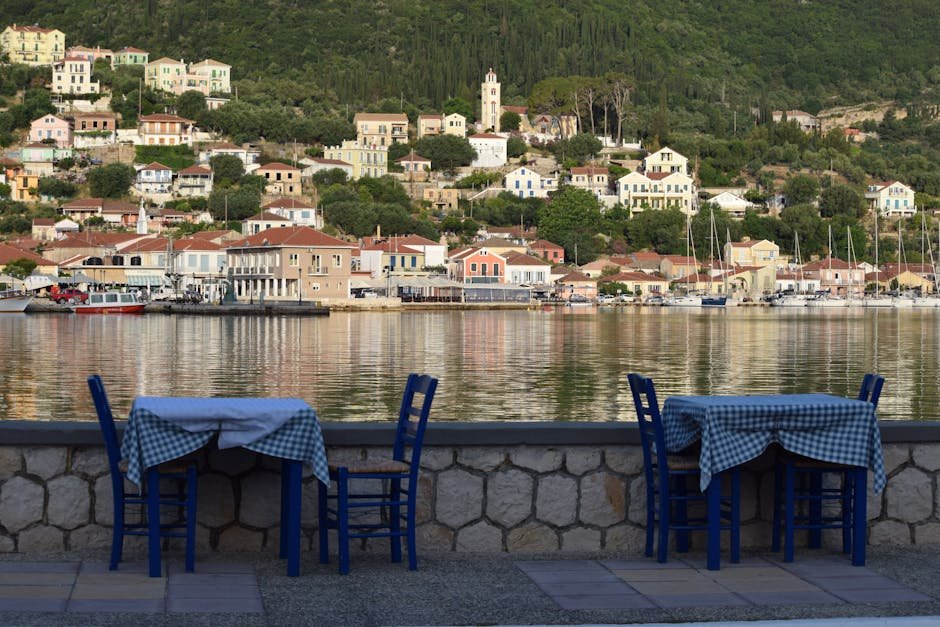
What surprised me most was the absence of overt Homeric tourism. There are no plastic Trojan horses here, no theme bars named Siren’s Song. Instead, you find a town that keeps its mythology close, lived in rather than performed.
Picturesque dining setup by the sea on a Greek island with beautiful hillside view.

Vathy Harbor, Ithaca

Early morning in Vathy - fishermen repairing nets, the hum of small engines, shutters creaking open. The aroma of strong Greek coffee drifts out from Café Spavento, a spot as old-fashioned as its wooden chairs.

Reading Homer at Sea

Punctuation, poetry, and practical navigation

I tried to match the Homeric geography to the map on my chart table. Odysseus leaves Troy, is blown off course, and circles the islands for ten years. Names change: the Sirens’ rocks, the Laestrygonians’ land, Scylla and Charybdis. The Ancient Greeks navigated by stars, wind, and stories. My guide was a battered Penguin Classics, its margins scribbled with salt-stained notes.

Did you know?

Homer never visited most of the places he described - his geography is a blend of fact, poetic license, and centuries-old sailors’ lore.

Sailing these waters, you realize what the Odyssey got right: the sudden squall, the headland looming at dusk, the way islands emerge from fog as if conjured. In September, with the meltemi wind mostly gone and water still warm from summer, you find stretches of utter calm broken only by the slap of a dolphin’s tail.

Essential Tips

  • 1

    Charter outside peak season - September offers better prices (EUR 4200/week for a 4-cabin catamaran, compared to EUR 6000+ in July). Marinas rarely fill.

  • 2

    Read a map, not just Homer - Many 'Odyssean' sites are local legends, so consult nautical charts before detouring after a myth.

  • 3

    Anchor etiquette - Drop anchor away from ferry lanes, and expect a local to offer help (often for a tip of EUR 10-15).

Kefalonia: Islands of Giants and Earthquakes

Where the geography dwarfs the myth
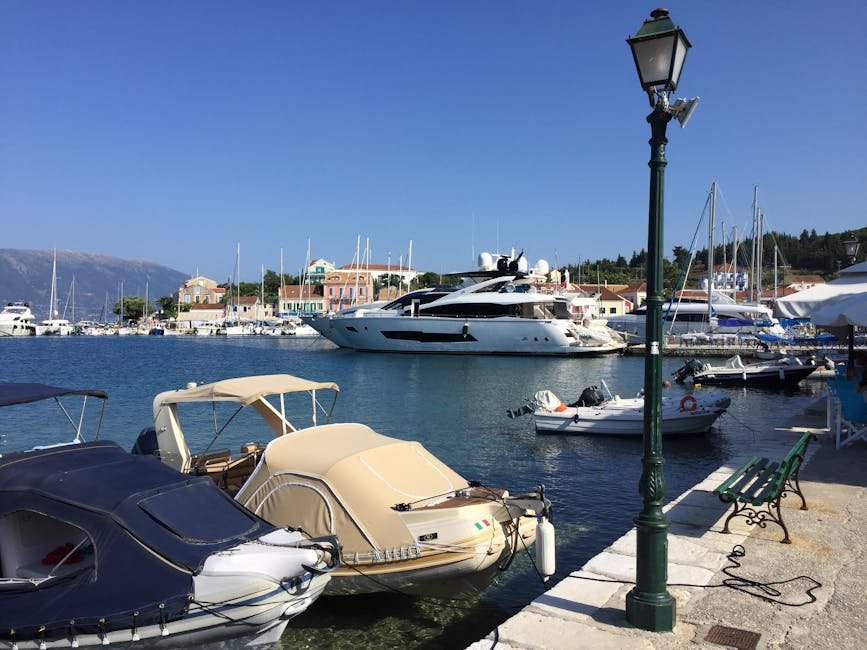
Kefalonia rises from the sea like the shoulder of some sleeping titan. Argostoli is modern and kinetic, with ferries coming and going, but the grandeur is inland. Mount Ainos, black with fir trees, still towers above - its slopes home to wild ponies and, according to ancient myth, the wind-horse of Aeolus. The 1953 earthquake cracked the island open, reshaping both villages and memory. Most buildings are postwar, but traces of Venetian arches remain near Fiskardo.
Picturesque yachts docked in the harbor of Fiskardo, Greece, under clear blue skies.

Fiscardo, Kefalonia

Venetian houses painted in pastel shades - lemon, ochre, sea-green. In September, the yachts thin out and the tables at Taverna Vasso (the one with the old olive press out front) fill with locals debating the price of sardines.

You can taste the island’s history in a plate of bakaliaros (salt cod) or a glass of Robola wine, sharp and slightly resinous. In Homer, the kingdom of Odysseus is sometimes described as encompassing parts of Kefalonia too - the lines between myth and map remain as blurred as the dusk horizon.
Taverna Vasso
4.6

Family-run taverna with grilled fish, house wine, and a terrace overlooking the Venetian harbor.

€€Fiskardo, Kefalonia
Robola Cooperative Winery
4.7

Winery offering tastings of Kefalonia’s signature Robola varietal, open daily 10am–7pm.

€Omala Valley, Kefalonia
One evening, you might sit with fishermen at the quay, their hands rough with line and olive oil, arguing whether Odysseus ever set foot here at all. History has no patience for certainty. Their stories, passed over shots of tsipouro, are as tangled as any epic.

Lefkada: The Cliffs of Sappho

White stone, blue sea, and a leap into legend

Lefkada’s west coast is a sheer drop of chalky white into impossible blue. Cape Lefkatas, the southernmost point, is a place of endings. Here, according to ancient tradition, Sappho - the greatest lyric poet of antiquity - leapt to her death for love. The legend is probably later Roman invention, but the cliffs still feel haunted. Boats keep a respectful distance; the updrafts are for gulls and ghosts.
You approach by sea, sails furled. Sunlight burns off the morning haze, and the sea darkens to that elusive wine color. Standing on deck with Homer in hand, you can imagine the shipwrecks and yearnings that fill every stanza.

Did you know?

The phrase 'wine-dark sea' appears five times in the Odyssey, always at moments of transition - arrivals, departures, and loss.
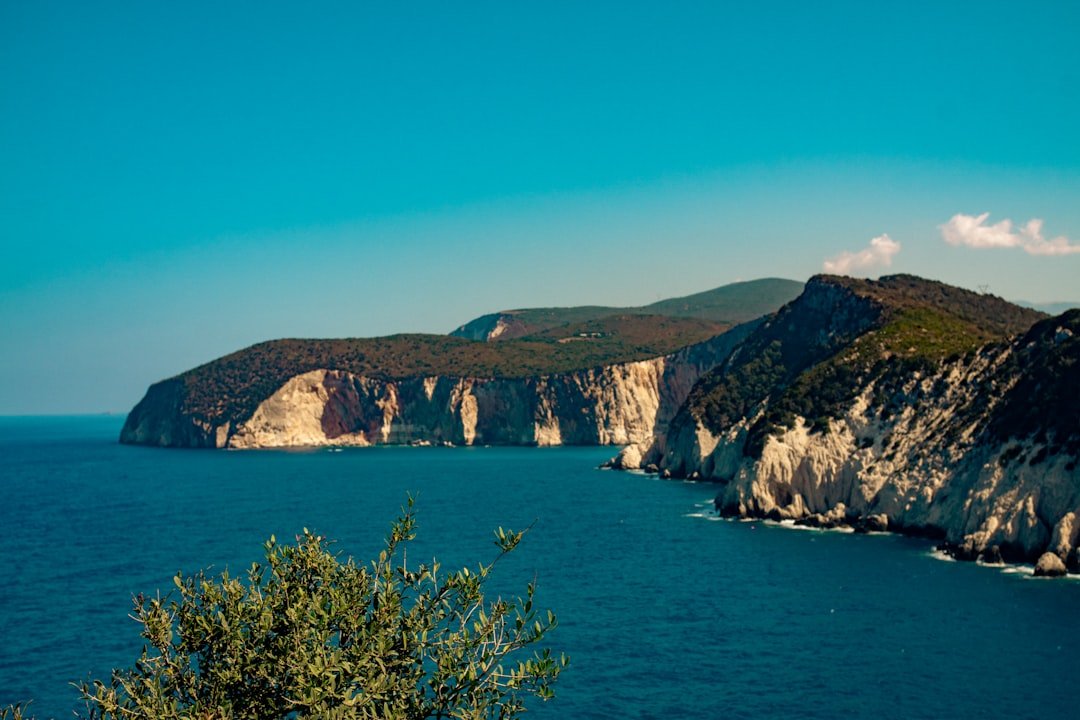
There’s a lighthouse now, and an unmarked path down toward the rocks. Most visitors never see the cliff from sea level - the view is for sailors, or for those willing to risk a scramble and a bruised shin.
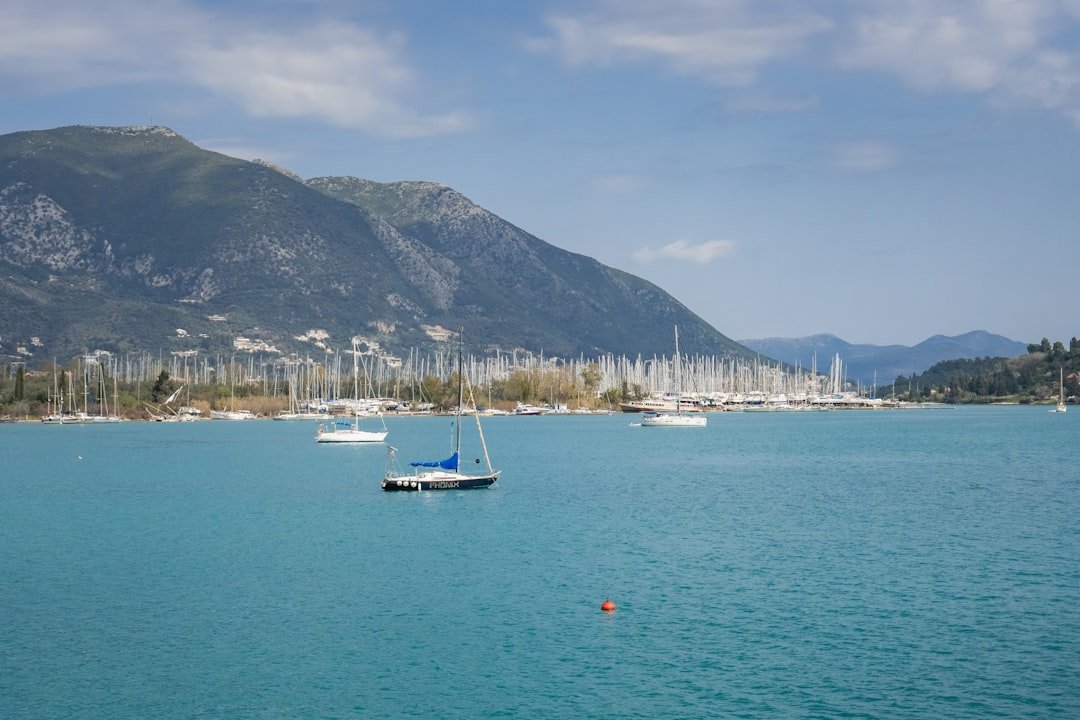
A large body of water surrounded by mountains

Cape Lefkatas, Lefkada

The limestone bluffs glow pink at sunset, their base battered by waves. In September, you might have the place to yourself, with only the thud of surf and the circling gulls for company.

Tavernas for Sailors, Not Instagrammers

Where the food is local and the gossip is ancient

Sailing the Ionian in September means you eat where the fishermen do. In Kioni (Ithaca), I shared a wooden table with two sailors and a retired teacher, their plates heaped with grilled octopus and fried zucchini blossoms, a jug of house white sweating between us. The waiter, who’d seen every kind of tourist blunder, only smiled when I hesitated over the menu: 'Trust the sea. Order the catch.'
It’s not about spectacle. The salad is just tomatoes, cucumber, a slab of sheep’s feta, olive oil pressed last autumn. You taste the sharpness of oregano, the brine of cheese, the sweetness of a tomato left to ripen until September sun. Evenings stretch long. Sometimes you talk about history, sometimes just the weather.

Taverna Kioni

Whitewashed chairs and faded blue tables by the quay. A cat prowling for sardine tails. No menus in English, no WiFi.

Taverna Mills
4.8

Simple, family-run spot in Kioni. Try the grilled sardines or whatever the fisherman lands.

€Kioni, Ithaca

A Sea of Story and Science

Old currents, new discoveries

Odysseus journeyed by trial and error, but the Ionian’s currents have a logic. The warm gentler waters of September draw loggerhead turtles to the beaches of Kefalonia, where you might see them nesting before dawn. A century ago, these straits teemed with monk seals - now rare, but sometimes spotted near deserted islets. Even the color of the sea has an explanation: dissolved organic matter scatters red light at sunset, giving the surface its 'wine-dark' hue under the right sky conditions. Homer, it turns out, was both a poet and a proto-oceanographer.
“
"For always night and day, untiringly, the sun drives around the shining earth." - Homer, Odyssey, Book III
One evening near Lefkada, I watched the sky fade and the sea darken, the words of Homer heavy as the anchor chain. The ancient world knew both the fear and comfort of water: unpredictable, life-giving, a realm of monsters and memory. For all our GPS and charts, that feeling lingers.

No Neat Endings

Lessons from a mythic voyage

You end where you began: back in Ithaca, or perhaps in the pages of Homer, still searching for home. The Ionian islands are real and not real, their landscapes refracted through a thousand stories. In September, the wine-dark sea is quieter than summer, but the past is never entirely at rest. You lower the sails, close the book, and listen to the hush of waves against hull - a journey’s end, and yet not quite.
Sarah Mitchell

Sarah Mitchell

Travel Editor at Vitano Magazine