Taking the Waters: Karlovy Vary and the Spa Triangle That Healed Emperors

Taking the Waters: Karlovy Vary and the Spa Triangle That Healed Emperors

Tom Eriksson

Tom Eriksson

August 25, 2026

7 min read
The funicular to Diana Lookout Tower was my first smart move. While my 4-year-old Oliver pressed his nose against the window counting trees, I watched Karlovy Vary unfold below - a pastel city built around the promise of healing water. The Vřídlo geyser shot its 12-meter column into the air like clockwork, drawing tourists to its glass pavilion. From this height, the famous colonnades looked like elaborate train stations, which isn't far from the truth. They were designed to move people efficiently from spring to spring, cure to cure.
My 7-year-old Lucas had already declared the whole spa thing 'gross' before we'd even tasted the water. Fair enough. The first sip from a traditional porcelain cup - complete with its built-in straw spout - is an acquired taste. The water emerges from deep underground at temperatures ranging from 30°C to 73°C, carrying minerals that have been dissolving into it for thousands of years. It tastes like liquid earth, with a metallic edge that makes your mouth pucker.

Literary Connection

Johann Wolfgang von Goethe visited Karlovy Vary 13 times between 1785 and 1823, calling it his 'beloved Karlsbad'

The Cure That Built an Empire

From medieval discovery to UNESCO recognition

Plan your trip with AI

Turn inspiration into a real itinerary. Plan day-by-day routes, find the best spots, and share with friends.

The story begins in 1358, when Holy Roman Emperor Charles IV was hunting near the Teplá River. His hounds chased a deer into the forest and returned yelping, their paws scalded by hot springs. The emperor investigated and found water bubbling from the earth at 73°C. Legend, perhaps, but Charles IV did establish the first spa here, naming it after himself - Karlovy Vary, Charles's Boiling Place.
By the 18th century, the Bohemian Spa Triangle had crystallized around three towns: Karlovy Vary (Carlsbad), Mariánské Lázně (Marienbad), and Františkovy Lázně (Franzensbad). Each specialized in different ailments. Karlovy Vary treated digestive disorders. Mariánské Lázně focused on kidney and respiratory conditions. Františkovy Lázně became known for women's health and fertility treatments. The Habsburg monarchy essentially turned healing into an industry.
“
Karlsbad is a place where one goes not to be cured, but to learn the art of living. - Goethe, 1810
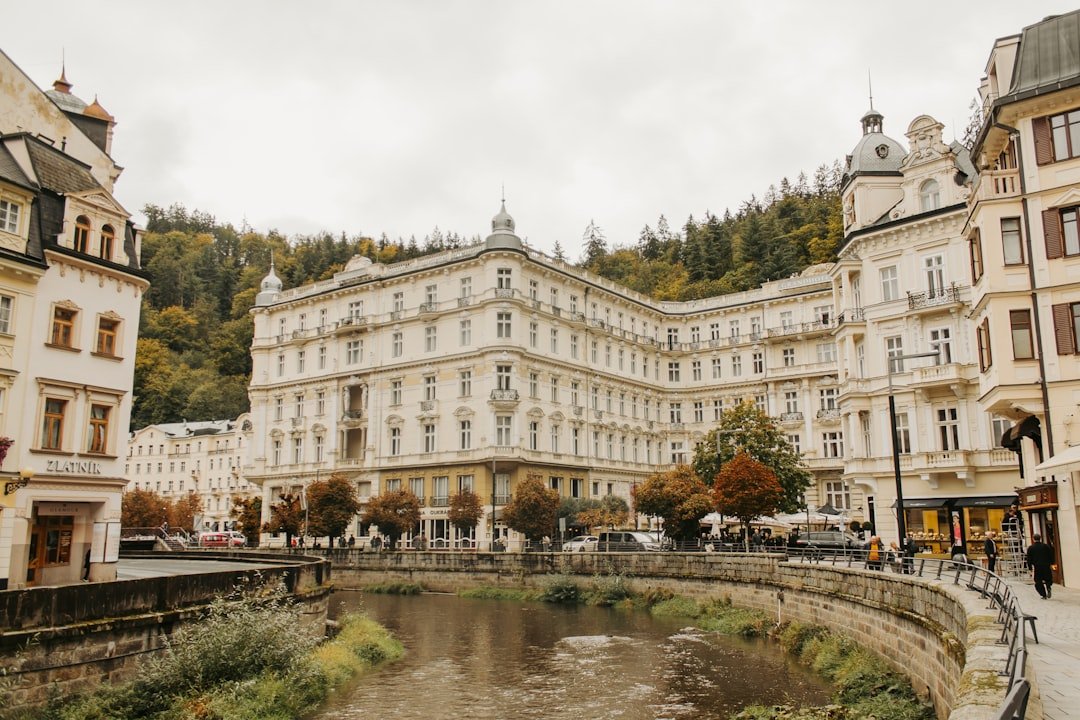
The guest list reads like a who's who of European culture. Beethoven composed here in 1812, complaining about the early morning cure schedule but praising the peaceful environment. Chopin gave concerts in the salon of the Pupp Hotel. Karl Marx wrote parts of Das Kapital while taking the waters in 1874, though he grumbled about the bourgeois atmosphere. The Russian connection runs deep - from Tsar Peter the Great to Gogol, Turgenev, and later, Soviet-era officials who turned Karlovy Vary into a Communist Party retreat.
A river running through a city next to tall buildings

Mill Colonnade

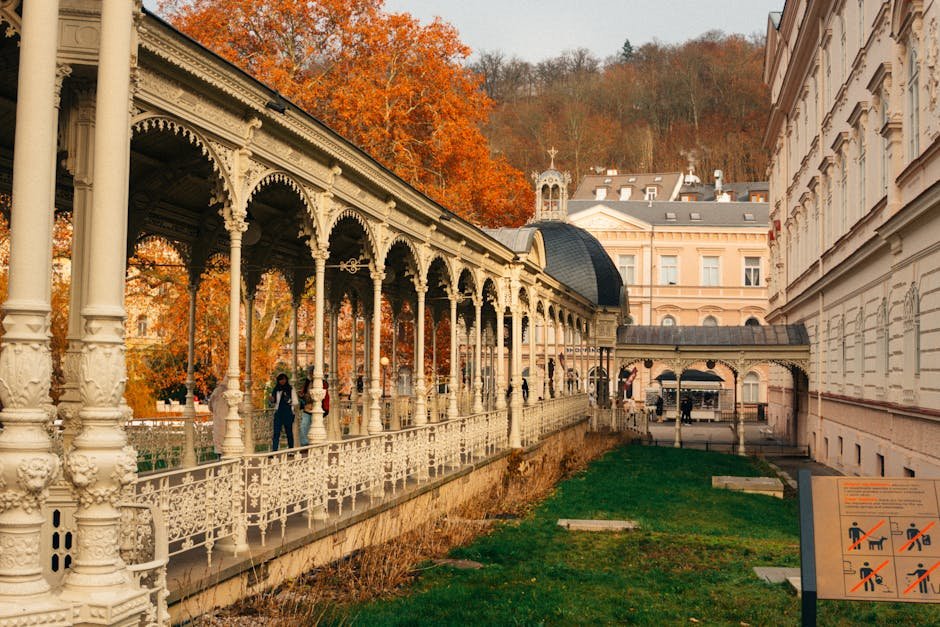
The largest colonnade in Karlovy Vary stretches 132 meters and houses five springs. Built in neo-Renaissance style between 1871-1881, it's where the serious spa-goers gather each morning with their porcelain cups, following prescribed walking routes between springs.

The Science Behind the Springs

What makes these waters special

All 15 springs in Karlovy Vary come from the same underground source, emerging at different temperatures as they rise through rock layers. The water contains sodium sulfate, sodium bicarbonate, and carbon dioxide - the same minerals that form the town's famous sinter terraces. These white, chalky deposits build up around the springs, creating natural sculptures that grow centimeters each year.
Modern medicine has largely validated what 18th-century doctors intuited. The mineral content does aid digestion and can help with certain metabolic disorders. The prescribed routine - wake at 6 AM, walk between springs, sip slowly, rest, repeat - forces a slower pace that probably helps more than the water itself. It's mindfulness disguised as medicine, which explains why stressed executives still flock here.

The Drinking Cure Protocol

Traditional spa treatment involves drinking 6-8 glasses of thermal water daily, starting before breakfast. Each spring has specific instructions: Vřídlo spring for digestive issues, Castle Spring for liver conditions. The cure typically lasts 3-4 weeks, though modern visitors usually sample all springs in a day.

Family-Friendly Spa Culture

Making centuries-old traditions work with modern kids

Emma warmed up to the spa experience when I framed it as a treasure hunt. Each colonnade offered different architecture to explore - the cast-iron Market Colonnade from 1883, the wooden Park Colonnade that looks like a Swiss chalet, the modern Hot Spring Colonnade that houses the powerful Vřídlo geyser. She collected stamps in a spa passport from each spring, turning the cure into a game.
The waffle stands saved the day for Lucas. Karlovy Vary has perfected the art of the spa waffle - thin, crispy, filled with honey or jam. They're sold from small carts positioned strategically between springs, acknowledging that not everyone can survive on mineral water alone. The smell draws families like a magnet, creating impromptu picnic spots in the colonnade gardens.

Spa Triangle with Kids

  • 1

    Start with Františkovy Lázně - smallest, most walkable, with the best parks and playgrounds

  • 2

    Pack your own spa cups - kids prefer their own designs to the traditional porcelain ones

  • 3

    Time the geyser - Vřídlo erupts every few minutes; kids love predicting the next burst

  • 4

    Use the funiculars - Diana Tower in Karlovy Vary, chairlift in Mariánské Lázně provide aerial perspectives

  • 5

    Plan for naps - the slow spa pace actually works well with younger children's schedules

Oliver discovered that the thermal springs create their own weather systems. Steam rises from the pavilions even on cold days, creating magical fog effects that fascinate small children. The glass-enclosed Hot Spring Colonnade becomes a greenhouse where tropical plants thrive year-round, heated naturally by the 73°C spring water. He spent an hour watching condensation patterns on the windows.

Becherovka: The Thirteenth Spring

From medicinal secret to Czech national drink
In 1807, English physician Dr. Frobrig shared a secret herbal recipe with local pharmacist Josef Becher. The resulting liqueur, made from 32 herbs and spices, was marketed as a digestive aid - the '13th spring' of Karlovy Vary. Becherovka became so associated with the spa treatment that bottles were prescribed by doctors and sold in pharmacies.
The Jan Becher Museum occupies the original distillery building, where the secret recipe remains locked in a safe. Only two people at any time know the complete formula. The museum tour includes tastings (adults only, obviously), but kids enjoy the old advertising posters and the mechanical bottling displays. The gift shop sells Becherovka-flavored chocolates that provide a family-friendly introduction to the famous bitter herbal taste.
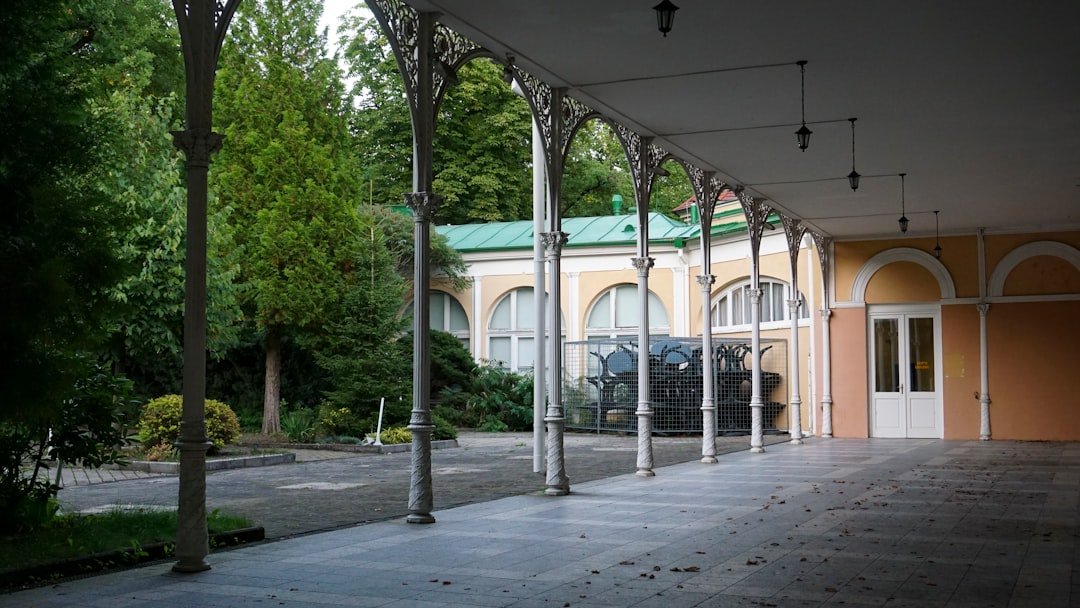
a building with columns and a green roof

Mariánské Lázně Colonnade

The cast-iron colonnade in Mariánské Lázně stretches through the town center, connecting springs with hotels and cafes. Built in 1889, it showcases the engineering confidence of the Habsburg era - light, elegant, and designed for year-round use regardless of weather.

The Russian Connection

From tsars to film festivals

Russian aristocrats discovered Karlovy Vary in the early 19th century, drawn by the same healing promises that attracted Western Europeans. They built Orthodox churches, established Russian-language newspapers, and created a little St. Petersburg in the Bohemian hills. The Church of St. Peter and Paul, with its golden onion domes, still anchors the Russian quarter.
After 1945, the Soviet connection deepened. Party officials and state-approved artists used Karlovy Vary as a retreat. The annual film festival, established in 1946, became one of Eastern Europe's most important cultural events. Even today, Russian tourists form the largest international group, though geopolitical tensions have reduced their numbers since 2022.

Cultural Impact

The Karlovy Vary International Film Festival attracts over 140,000 visitors annually, making it one of Europe's oldest A-list festivals

Modern Wellness Meets Historic Tradition

How the spa triangle adapts to contemporary health culture

Today's spa hotels blend 18th-century hydrotherapy with modern wellness trends. The Pupp Hotel offers traditional Karlovy Vary salt baths alongside yoga classes and organic cuisine. Newer establishments like the Thermal Hotel focus on medical spa treatments, using the mineral waters in sophisticated hydrotherapy pools and inhalation chambers.
The contradiction fascinates me as a parent. We live in an age of instant everything, yet people still travel here to walk slowly between springs, sipping bitter water according to 200-year-old protocols. My kids initially found it boring, then oddly relaxing. Emma started requesting 'spa walks' at home, wanting to recreate the peaceful rhythm of colonnade strolling.
Diana Lookout Tower
4.5

Funicular railway to observation tower with panoramic views. Kid-friendly with playground at the base.

CZK 60 funicular, CZK 30 towerVrch přátelství, Karlovy Vary
Jan Becher Museum
4.2

Original Becherovka distillery with historical displays and tastings. Educational for families.

CZK 120 adults, CZK 60 childrenT.G. Masaryka 57, Karlovy Vary
Františkovy Lázně Town Center
4.3

Most compact spa town with beautiful parks, ideal for families with young children.

Free to exploreFrantiškovy Lázně

UNESCO Recognition and Future Preservation

Protecting Europe's great spa culture

In 2021, the Great Spa Towns of Europe gained UNESCO World Heritage status, recognizing eleven spa cities across seven countries. The Bohemian Spa Triangle represents the largest concentration of these protected sites. The designation acknowledges not just the architecture and natural springs, but the intangible cultural heritage - the rituals, the social customs, the entire lifestyle built around healing waters.
This protection comes at a crucial time. Climate change threatens underground water sources. Mass tourism can overwhelm delicate historic structures. The challenge lies in preserving authentic spa culture while making it accessible to modern families like mine. Some hotels now offer 'mini-cures' designed for weekend visitors. Others create family packages that introduce children to spa traditions through games and educational activities.

Planning Your Spa Triangle Visit

Best time: May-September for outdoor activities, though thermal springs provide year-round appeal. Allow 3-4 days to experience all three towns properly. Book accommodations early during film festival (July) and summer peak season. Many spa hotels offer family rooms and children's programs.

On our final morning, Lucas surprised me by asking for 'one more spring' before we left. He'd developed a preference for the Park Spring in Mariánské Lázně, claiming it tasted 'less like pennies' than the others. Emma had filled her journal with sketches of colonnade details and interviews with elderly spa-goers who shared stories of decades-long cure traditions.
The drive home took us through rolling Bohemian countryside dotted with small spa towns that never achieved international fame. Each has its own springs, its own healing claims, its own modest colonnade. It struck me that we'd experienced something increasingly rare - a place where slow living isn't a lifestyle choice but a medical prescription, where boredom is therapeutic, where the cure works precisely because it forces you to stop rushing.
Oliver fell asleep clutching his collection of spa cups, the porcelain ones clinking softly in his backpack. When he wakes up at home and asks to 'go back to the water place,' I'll know the Bohemian Spa Triangle has worked its centuries-old magic on another generation. Some cures, apparently, are worth preserving.
Tom Eriksson

Tom Eriksson

Travel Editor at Vitano Magazine