Tulip Mania: From the World's First Financial Crash to Holland's Flower Fields

Tulip Mania: From the World's First Financial Crash to Holland's Flower Fields

Isabelle Dubois

May 1, 2026

5 min read· 23 views
The invoice, preserved in the Amsterdam City Archives, reads like a fever dream: one Semper Augustus tulip bulb for 10,000 guilders. To put this in perspective, a skilled craftsman earned 150 guilders per year. The same amount could have purchased a grand house along the Herengracht, complete with garden and coach house. Yet on February 5, 1637, someone paid it gladly.
The tulip bubble, history's first recorded speculative mania, collapsed within days. But the flower itself endured, transforming the Dutch landscape and economy in ways that persist today. Standing in the Keukenhof gardens each April, surrounded by seven million blooms arranged in mathematical precision, one witnesses the legacy of that 17th-century obsession.

The Ottoman Gift That Became Dutch Gold

How Constantinople's court flower conquered Europe

The tulip's European story begins not in Holland but in the gardens of Süleymaniye Palace in Constantinople, where Ottoman gardeners had cultivated these Persian imports since the 15th century. Ogier de Busbecq, Habsburg ambassador to the Ottoman court, first described them in 1554: "The Turks pay great attention to flowers, and though they are careful about money in other matters, they do not hesitate to pay a considerable sum for an exceptional bloom."

Plan your trip with AI

Turn inspiration into a real itinerary. Plan day-by-day routes, find the best spots, and share with friends.

Carolus Clusius, the Flemish botanist who established Leiden's Hortus Botanicus in 1590, received the first tulip bulbs from Constantinople via Vienna. His meticulous cultivation notes, still preserved in Leiden University's archives, reveal a man enchanted by the flower's infinite variations. Each bulb produced offspring slightly different from the parent, creating an endless palette of colors and patterns.

Botanical Irony

A tulip bulb takes 7 years to grow from seed to flower, but virus-infected bulbs create the most spectacular blooms

The most prized tulips-those with flame-like streaks and broken colors-were actually diseased, infected with what we now know as tulip breaking virus. The virus weakened the bulb, making it rare and eventually sterile, which only increased its value. The Dutch didn't understand the science, but they grasped the economics: scarcity breeds desire.

The Madness of Markets

When flowers became currency

By 1634, tulip trading had moved from gardens to taverns. The Haarlem Museum displays the original contracts: elaborate documents detailing bulb futures, complete with penalty clauses and delivery dates. Traders dealt in bulbs still buried in the ground, selling rights to flowers that might not bloom for months.
"A sailor, mistaking a valuable tulip bulb for an onion, ate it with his herring breakfast. The bulb was worth enough to feed his entire ship's crew for a year." - Charles Mackay, Extraordinary Popular Delusions, 1841
The crash came suddenly. On February 3, 1637, a routine bulb auction in Haarlem failed to attract buyers. Panic spread through the taverns where tulip contracts were traded. Within a week, bulb prices collapsed by 90%. Fortunes evaporated overnight, and the Dutch learned their first lesson in speculative bubbles-though certainly not their last.
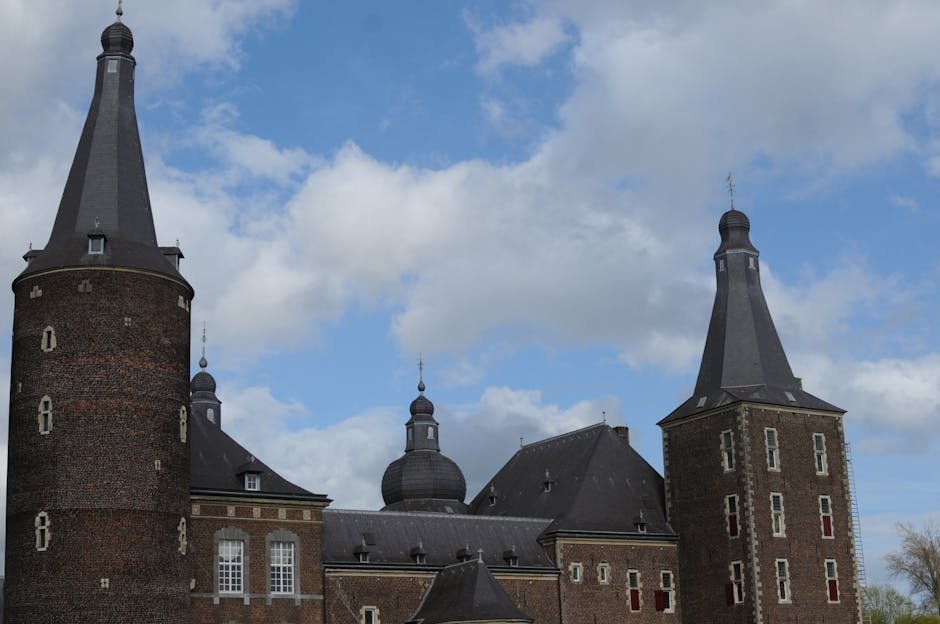
Majestic castle towers in Amsterdam with classic architecture set against a bright blue sky.

Haarlem's Tulip Museum

Located in a 17th-century canal house, this intimate museum displays original tulip mania documents alongside historic bulbs and period paintings. The weight of the contracts, written on thick parchment with iron gall ink, makes the financial frenzy tangible.

Modern Flower Power

How the Netherlands conquered global floriculture

At 5:30 AM each weekday, the Aalsmeer Flower Auction begins operations in what is officially the world's largest building by footprint. The structure covers 990,000 square meters-larger than Monaco. Inside, 20 million flowers and two million plants change hands daily in a reverse auction system where prices start high and drop until someone bids.
The Dutch auction clock, invented here in 1887, remains the fastest method for selling perishable goods. Buyers sit in amphitheater-style galleries, watching prices plummet second by second on massive electronic displays. The tension is palpable: wait too long and someone else claims the lot; bid too early and you overpay.
CountryGlobal Flower Export ShareAnnual Value (EUR)
Netherlands80%4.5 billion
Colombia15%900 million
Ecuador9%540 million
Kenya7%420 million
The statistics are staggering. The Netherlands exports 12.9 billion flowers annually, despite having less land area than West Virginia. This efficiency stems from centuries of innovation: greenhouse technology perfected during the Little Ice Age, precision irrigation systems, and genetic research that produces 1,400 new tulip varieties each year.

Cycling Through Color

The art of timing tulip season

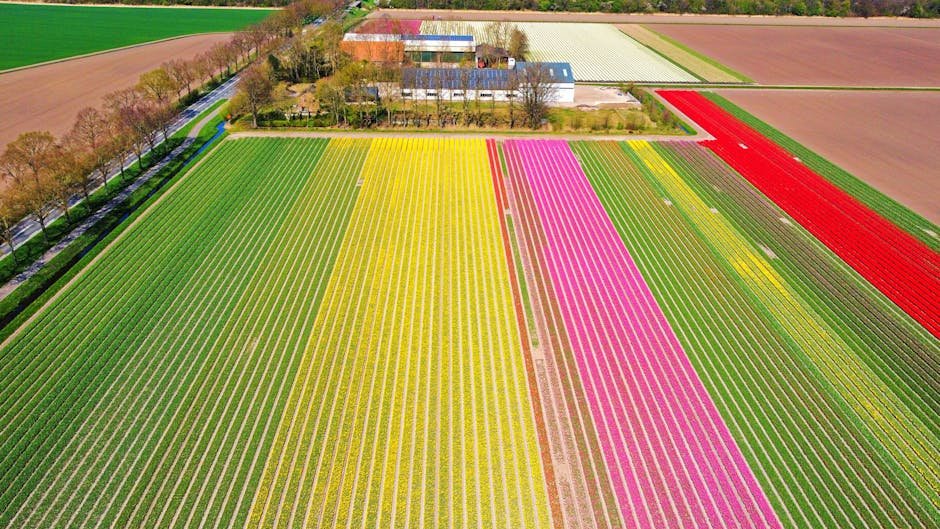
The tulip fields bloom in waves, beginning with early varieties in mid-March and ending with late bloomers in early May. The optimal viewing window lasts just three weeks, when commercial growers allow their fields to flower before cutting the heads to strengthen the bulbs. This brief spectacle draws 4.2 million visitors annually to the Bollenstreek region between Leiden and Haarlem.

Cycling the Bulb Fields

  • 1

    Rent at Leiden Central Station - avoid Amsterdam's crowds and start your route where the fields begin

  • 2

    Download the Flower Route app - provides real-time bloom reports and optimal cycling paths

  • 3

    Visit between 10 AM and 2 PM - morning dew makes cycling treacherous, and afternoon light is harsh

  • 4

    Respect the fields - walking through tulip rows destroys next year's crop and carries heavy fines
The Keukenhof, open only eight weeks each spring, represents Dutch horticultural theater at its finest. Seven million bulbs, planted each autumn by 40 gardeners, create living paintings across 79 acres. The design changes annually, but the underlying geometry remains constant: straight lines, mathematical curves, color gradations that would make a Mondrian weep.
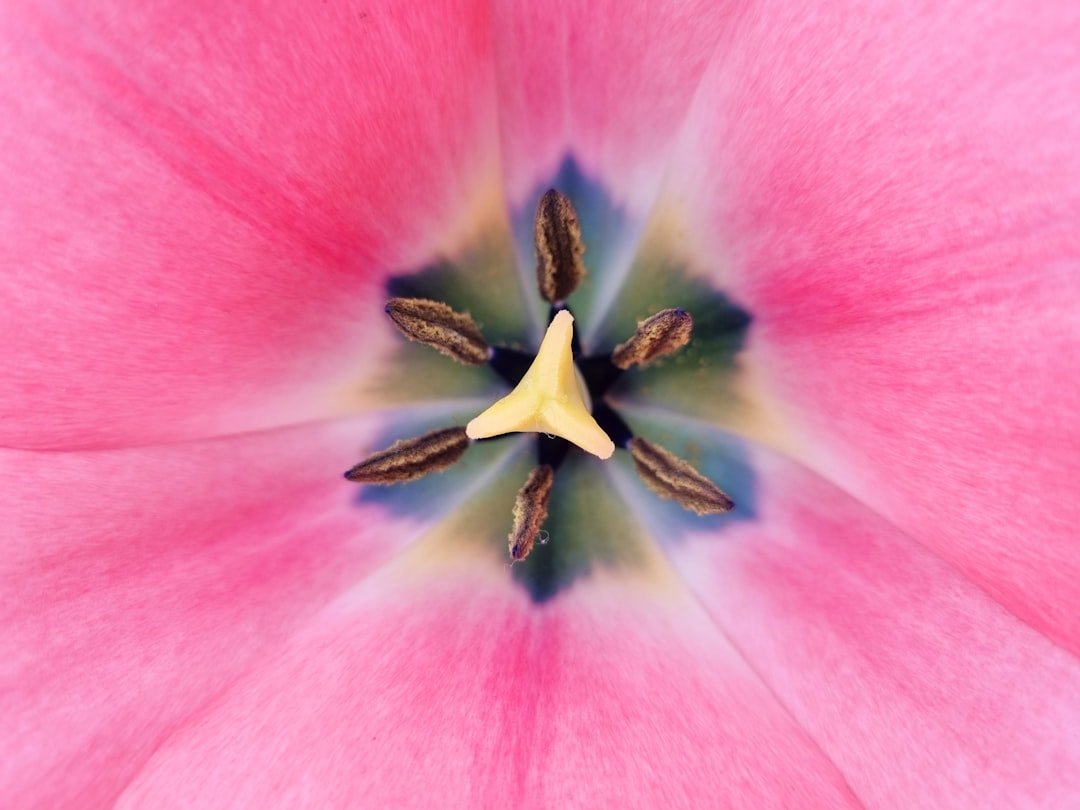
a close up of a pink flower with a yellow center

Keukenhof Gardens

Each spring, landscape architects transform 79 acres into a living canvas using seven million bulbs. The precision is breathtaking-every tulip positioned according to mathematical principles that create perfect sight lines and color harmonies.

Beyond Keukenhof's manicured perfection, the working fields tell a different story. Here, tractors move between rows with surgical precision, and workers in reflective vests monitor soil temperature with digital thermometers. The romance of tulip farming is largely mechanical now, governed by GPS coordinates and climate-controlled greenhouses.

Visiting Practical Information

Tulip season runs March 15 to May 15, weather dependent. Keukenhof tickets cost EUR 19.50 online, EUR 21 at the gate. Free parking available, or take Bus 858 from Leiden. The Flower Route cycling path spans 40 kilometers with bike rental from EUR 12 per day.

The Economics of Beauty

Why flowers matter to Dutch prosperity

Floriculture employs 155,000 people in the Netherlands and generates EUR 5.6 billion annually-more than the country's famous cheese industry. The Westland greenhouse complex, visible from space as a sea of glass south of The Hague, produces flowers year-round using LED lighting and hydroponic systems that consume 90% less water than traditional farming.
The irony isn't lost on economists: a country that nearly destroyed itself over flower speculation now dominates the global flower trade through ruthless efficiency and technological innovation. The tulip mania's lesson-that beauty has value but value requires substance-shaped centuries of Dutch commercial pragmatism.
Aalsmeer Flower Auction
4.3

World's largest flower auction in the world's largest building. Viewing galleries open weekdays 7-11 AM.

EUR 7.50 entryLegmeerdijk 313, Aalsmeer
Haarlem Tulip Museum
4.1

Intimate museum in historic canal house with original tulip mania documents and artifacts.

EUR 5 entryGedempte Begijnensloot 21, Haarlem
Modern tulip breeding happens in climate-controlled laboratories where technicians cross-pollinate varieties with tweezers and magnifying glasses. Each new cultivar requires seven years of testing before commercial release. The process mirrors the patience of 17th-century gardeners, but with scientific precision replacing intuition.
Today's most expensive tulips cost EUR 25 per bulb-expensive for a garden center, but nowhere near the inflation-adjusted EUR 750,000 paid for Semper Augustus. The market has matured, driven by genuine demand rather than speculative fever. Beauty, it seems, has found its proper price.
Standing in a Lisse field at dawn, watching the sun illuminate rows of red and yellow tulips stretching to the horizon, one grasps the enduring appeal. The Dutch transformed their historical obsession into industrial advantage, proving that even financial manias can bloom into lasting prosperity when rooted in genuine expertise and relentless innovation.

Isabelle Dubois

Travel Editor at Vitano Magazine

You might also enjoy

Swedish Midsommar: Dancing Around the Maypole at the Edge of the Arctic
Where to Go9 min

Swedish Midsommar: Dancing Around the Maypole at the Edge of the Arctic

When my 11-year-old Oscar asked why we were hopping like frogs around a giant flower-covered pole at midnight in broad daylight, I realized we'd stumbled into something bigger than Christmas in Sweden. Midsommar isn't just a holiday-it's a pagan fertility ritual disguised as the world's most family-friendly party.

TE
Tom Eriksson
06/08/2026
Swedish Lapland: Dog Sledding and Aurora Under the Polar Night
Where to Go5 min

Swedish Lapland: Dog Sledding and Aurora Under the Polar Night

A week above the Arctic Circle, where the sun bows out for the polar night and the sky explodes in curtains of green. Swedish Lapland offers more than just a frozen landscape - it's a primal playground of dog sledding through silent forests, exploring the world-famous Icehotel, and immersing in Sami culture. Join me as we chase the northern lights and find warmth in the heart of the Arctic wilderness.

JC
James Chen
12/19/2025
The Curse of the Pharaohs: What Really Happened After Tutankhamun's Tomb
Where to Go3 min

The Curse of the Pharaohs: What Really Happened After Tutankhamun's Tomb

In November 1922, a team led by Howard Carter cracked open the sealed gateway to Tutankhamun’s tomb, unleashing a discovery that would captivate the world-and spark rumors of a deadly curse. Just four months later, Lord Carnarvon, the expedition’s financier, died unexpectedly. Newspapers howled “The Curse of the Pharaohs,” but was it supernatural vengeance or something far more earthly? Journey with me to Egypt’s Valley of the Kings where history, science, and legend collide beneath the desert sun.

NP
Nadia Petrova
11/08/2025