The Perfect Goulash: How a Cattle Herder's Stew Conquered Europe

The Perfect Goulash: How a Cattle Herder's Stew Conquered Europe

Elena Rossi

Elena Rossi

2026年10月15日

8 min read· 14 views
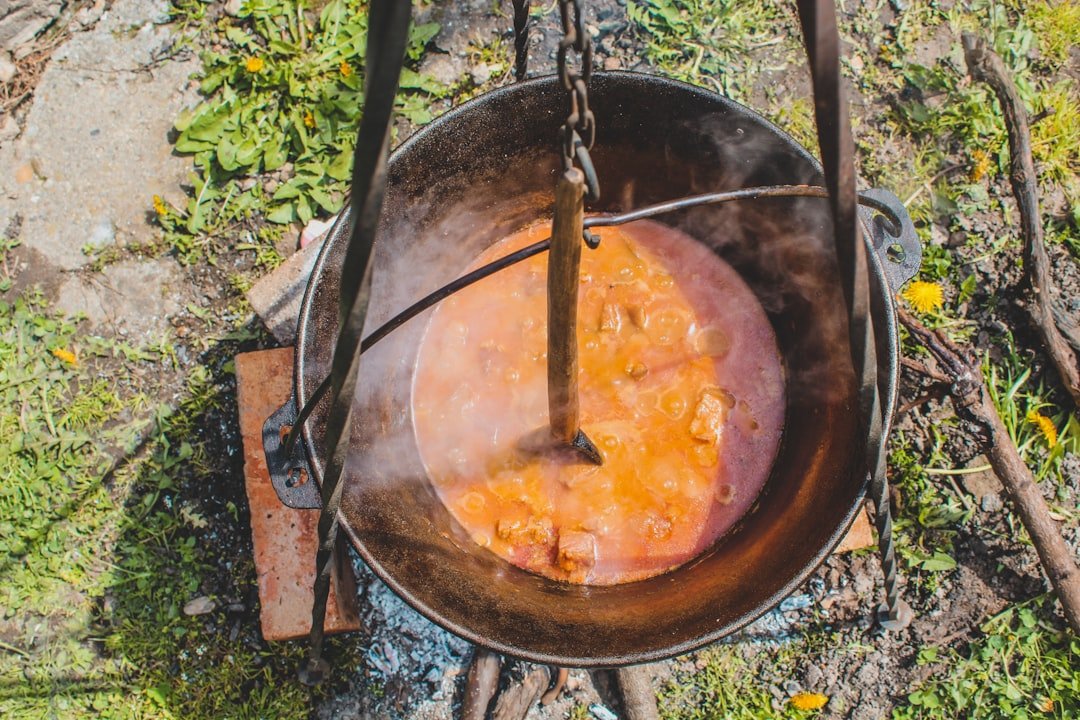
The morning mist rises from the Hortobágy puszta like steam from a giant's bowl, and somewhere in that endless grassland, a cattle herder named István is doing what his ancestors have done for over a thousand years. He's building a fire, setting up his bogrács - that black iron cauldron suspended on three chains - and preparing to cook the dish that would eventually seduce half of Europe. But gulyás, as he calls it, bears little resemblance to what most of the world knows as goulash.
The Magyar horsemen who thundered across the Carpathian Basin in 896 AD carried with them a revolutionary preservation technique. They would slice beef into thin strips, season it heavily with salt, and dry it in the sun until it became as hard as leather. This concentrated protein - called szárított hús - could last for months in their saddlebags, requiring only hot water and wild onions to transform back into a meal. It was the original fast food, designed for a nomadic people who measured distance in days, not kilometers.

The Paprika Revolution

How Columbus changed Hungarian cuisine forever

The transformation from survival ration to culinary icon required an ingredient that wouldn't arrive in Hungary for another six centuries. When Christopher Columbus returned from the Americas with capsicum peppers in 1493, he set in motion a chain of events that would eventually paint Hungarian cuisine red. The peppers traveled from Spanish gardens to Ottoman kitchens, and when the Turks occupied Hungary in 1541, they brought with them the seeds of what would become paprika.

Plan your trip with AI

Turn inspiration into a real itinerary. Plan day-by-day routes, find the best spots, and share with friends.

Historical fact

By 1569, paprika was being cultivated in Hungarian monastery gardens, but it wouldn't become the national spice until the 18th century
The genius of Hungarian cooks was recognizing that this New World spice could transform their ancient stew. Where once they had relied on black pepper - expensive and often adulterated - paprika offered both flavor and color at a fraction of the cost. By the 1700s, gulyás had evolved from a herder's necessity into a symbol of Hungarian identity, its deep red hue as recognizable as the national flag.
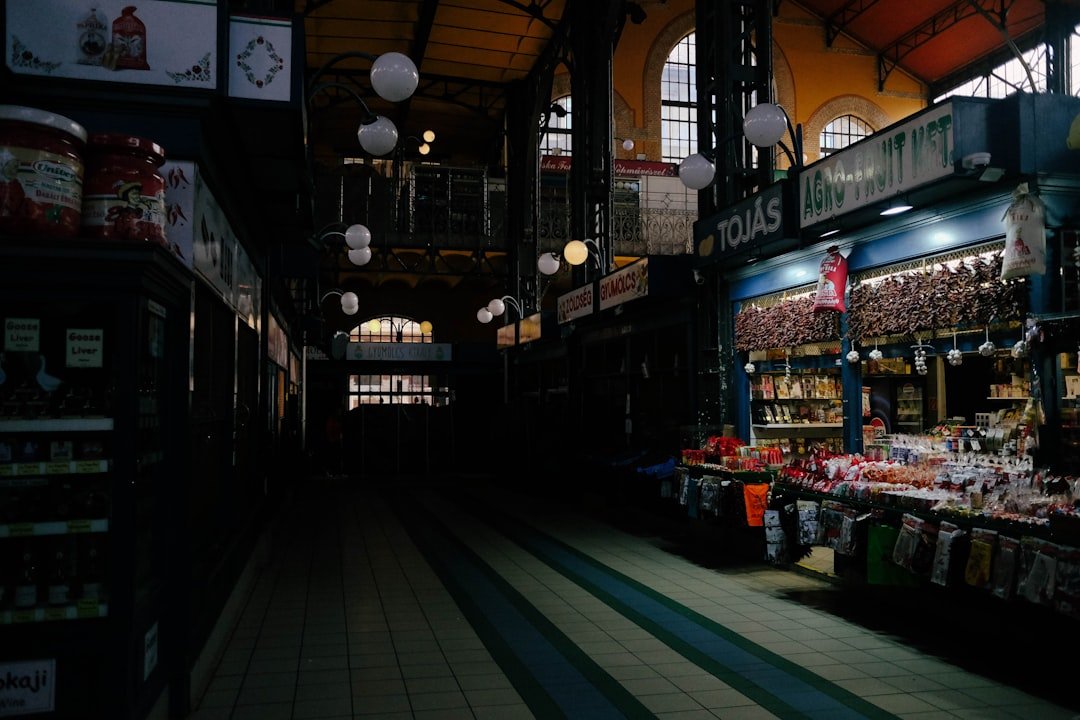
Interior of a dimly lit market hall with stalls.

Central Market Hall, Budapest

The Gothic Revival architecture of Budapest's Great Market Hall houses vendors selling paprika in every conceivable form - sweet, hot, smoked, and aged. The building itself, completed in 1897, represents Hungary's golden age of culinary nationalism.

Standing in Budapest's Central Market Hall today, surrounded by pyramids of paprika in shades ranging from sunset orange to deep burgundy, I can trace the DNA of European comfort food. Each national variation of goulash represents a cultural interpretation, a translation of Hungarian pastoral life into the urban realities of Vienna, Prague, and Berlin. The Austrians, with their imperial appetite for refinement, couldn't resist adding sour cream and calling it Gulasch. The Czechs, practical as always, thickened it with flour and root vegetables until it became more stew than soup.

The Austrian Interpretation

How the Habsburg Empire reimagined a peasant dish

In 1857, when the walls of Vienna came down to make way for the Ringstrasse, the city's culinary landscape was equally ready for reconstruction. Austrian cooks had been experimenting with Hungarian gulyás for decades, but they couldn't resist the temptation to improve upon what they saw as a rustic dish. They added sour cream, marjoram, and caraway seeds - spices that would make any Hungarian herder weep into his bogrács.
“
The Viennese have taken our gulyás and dressed it up like a Habsburg archduke - all pomp and ceremony, but missing the soul of the puszta.
Yet there's something to be said for the Austrian approach. In the grand coffeehouses of Vienna, where intellectuals debated the future of the empire over Sachertorte and melange, Wiener Gulasch became the perfect foil to all that sweetness. Served with Semmelknödel - those pillowy bread dumplings that soak up sauce like edible sponges - it represented the empire's ability to synthesize influences from across its vast territories.

Recognizing Authentic Styles

  • 1

    Hungarian gulyás - Thin soup with beef, onions, paprika, and potatoes. Never thickened with flour or cream

  • 2

    Austrian Gulasch - Thicker consistency, often served with sour cream and caraway seeds

  • 3

    Czech guláš - Very thick, more like a stew, traditionally served with bread dumplings (knedlíky)

  • 4

    German Gulasch - Often includes bell peppers and is served with pasta or spätzle

Prague's Hearty Transformation

When goulash becomes guláš

The Czechs approached Hungarian goulash with the same practical engineering mindset that would later give the world the Škoda automobile. If the original was too thin, they would make it thick. If it needed bread on the side, they would incorporate the bread directly into the dish. Czech guláš, served with knedlíky - those dense, sliceable bread dumplings - became a meal substantial enough to fuel workers through Prague's industrial winters.
In a traditional Prague hospoda, guláš arrives as a brown mountain of meat swimming in sauce so thick you could stand a spoon in it. The beef has been braised until it falls apart at the touch of a fork, and the sauce carries the sweetness of caramelized onions married to the earthiness of Czech paprika - milder than its Hungarian cousin, but no less essential. This is comfort food engineered for maximum satisfaction per crown spent.
U Fleků Brewery, Prague
4.3

Prague's oldest brewery (1499) serves traditional Czech guláš with dark beer dumplings

290 CZK ($13)Křemencova 11, New Town
Figlmüller, Vienna
4.5

Famous for schnitzel but their Wiener Gulasch is equally legendary

€16.50Wollzeile 5, Inner Stadt

The Fire Makes All the Difference

Why outdoor cooking creates superior goulash

Tours & ticketsGetYourGuide

Tours, entry tickets and day trips

Back on the puszta, István stirs his bogrács with a wooden spoon worn smooth by decades of use. The fire beneath crackles with beech wood, and the smoke imparts a flavor no kitchen stove can replicate. This is the secret that home cooks miss: authentic gulyás requires the kiss of wood smoke and the uneven heat of an open fire. The bottom of the cauldron gets hotter than the sides, creating layers of flavor as some onions caramelize while others barely soften.
The ritual is as important as the recipe. First, the lard renders slowly in the iron pot - none of that vegetable oil nonsense. Then come the onions, sliced thick and cooked until they weep golden tears. The paprika follows, but only for seconds before the meat goes in, because burnt paprika turns bitter as a broken heart. The magic happens in the hours that follow, as the beef releases its juices and the paprika blooms into that distinctive red-brown sauce that defines proper gulyás.

The Paprika Timing Rule

Never let paprika cook alone in hot fat for more than 30 seconds. The moment it hits the lard, add liquid or meat to prevent burning. Burnt paprika will ruin the entire pot with its bitter taste.

The German interpretation, found in Gasthäuser from Bavaria to the Baltic, represents perhaps the most liberal adaptation. German Gulasch often includes bell peppers - anathema to Hungarian purists - and is frequently served over egg noodles or spätzle rather than with bread. It's goulash filtered through the German preference for hearty, one-pot meals, practical food for practical people.

The Economics of Comfort

How goulash fed the working class across empires

The spread of goulash across Central Europe tells the story of urbanization and industrialization. As peasants left their villages for factory jobs in Vienna, Prague, and Berlin, they carried their food memories with them. Goulash, with its cheap cuts of beef transformed through time and patience, became the perfect dish for workers who needed maximum nutrition from minimal wages.
CityPrice (1900)Modern PriceServing Style
Budapest20 fillér1,200 HUF ($3.20)Thin soup with bread
Vienna25 kreuzer€8.50Thick with dumplings
Prague30 haléř180 CZK ($8)Very thick with knedlíky
Berlin25 pfennig€9.50With noodles or spätzle
The genius of goulash lies in its democratic nature. Unlike the elaborate dishes of court cuisine, which required expensive ingredients and skilled technique, goulash transforms the humblest materials into something approaching transcendence. A tough cut of beef, some onions, paprika, and time - these are ingredients available to anyone with access to a fire and a pot.
Yet each national interpretation reveals something profound about cultural identity. The Hungarians, proud of their nomadic heritage, kept their gulyás thin and soup-like, honoring its origins as a herder's meal. The Austrians, with their imperial pretensions, enriched it with cream and served it in porcelain bowls. The Czechs, pragmatic and hearty, made it substantial enough to satisfy industrial appetites. The Germans, efficient as always, adapted it to their existing culinary infrastructure of noodles and dumplings.
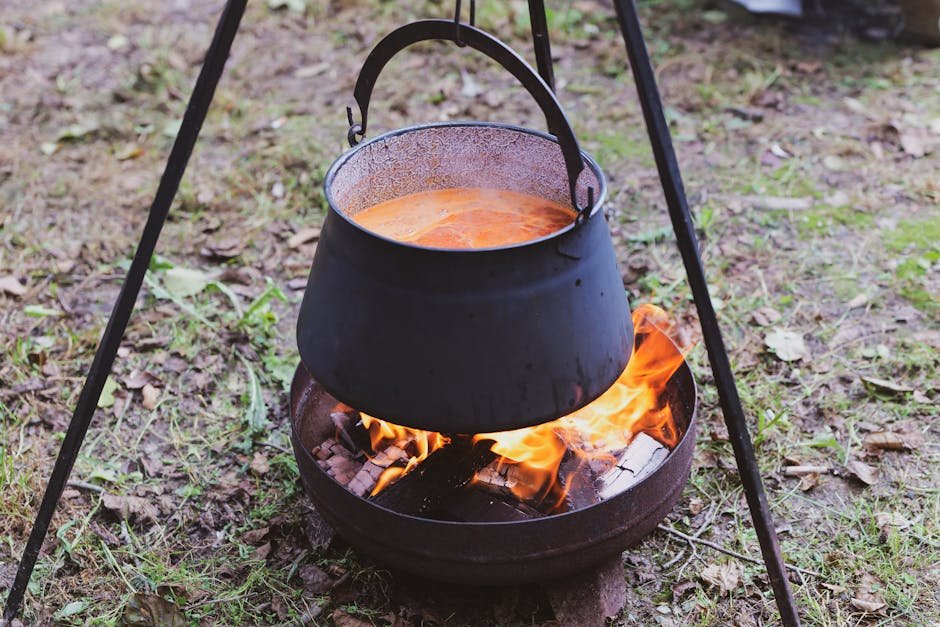
a pot of food cooking on a camp stove

Traditional Bogrács Cooking

The three-legged iron cauldron suspended over an open fire remains the authentic way to prepare gulyás. The uneven heat and wood smoke create flavors impossible to replicate in modern kitchens.

The Modern Pilgrimage

Tasting your way through goulash geography

Today's goulash hunter can trace this culinary migration across Europe, tasting the permutations and understanding how a single dish reflects the movement of peoples and ideas. In Budapest's Frici Papa restaurant, you can taste gulyás that would make István proud - thin, red, and swimming with tender beef and potatoes. Cross the border into Austria, and Figlmüller's Wiener Gulasch tells the story of imperial adaptation, rich with sour cream and served alongside schnitzel.
In Prague's beer halls, Czech guláš arrives thick enough to slice, a monument to Slavic practicality. And in Berlin's traditional restaurants, German Gulasch with spätzle represents the final evolution, a dish so far from its origins that it's almost unrecognizable - yet somehow still carrying the DNA of those Magyar horsemen and their dried meat.
Pros
  • Each version reflects authentic local tastes and traditions
  • Shows how cultures adapt foreign dishes to local ingredients
  • Demonstrates the democratic nature of peasant cuisine
Cons
  • Purists argue most versions aren't 'real' goulash
  • Tourist restaurants often serve inferior versions
  • Authentic preparation requires time most restaurants won't invest
The best goulash I've ever tasted wasn't in any of these famous establishments. It was from István's bogrács on the puszta, where the wind carries the scent of wild herbs and the fire crackles with the same rhythm that has sustained Hungarian herders for a millennium. There, with the sun setting over the endless grassland and the first stars appearing in the darkening sky, I understood that goulash isn't just about the recipe - it's about the fire, the time, and the hands that stir the pot.
As István ladled the gulyás into my bowl, he smiled and said something in Hungarian that my guide translated: "The secret isn't in the paprika - it's in the patience." Looking across the puszta where his ancestors had cooked this same dish for over a thousand years, I realized that every spoonful of goulash, whether in Budapest or Berlin, carries within it the memory of open fires, endless skies, and the simple human act of transforming the ordinary into the extraordinary.

AccommodationStay22

A map of places to stay near an address

Elena Rossi

Elena Rossi

Travel Editor at Vitano Magazine

You might also enjoy

Japan's Kissaten Culture: The Disappearing Art of the Coffee House
Food & Culture4 min

Japan's Kissaten Culture: The Disappearing Art of the Coffee House

In the quiet corners of Tokyo, Kyoto, and Osaka, the soft clatter of ceramic cups and the slow drip of siphon coffee machines mark the heartbeat of a fading era. Kissaten, Japan’s old-school coffee houses, embody a meditative pause in the rush of modern life. These velvet-upholstered sanctuaries of classical music and ritualized brewing are vanishing-whispering stories of a gentler, slower Japan that many never knew existed.

YT
Yuki Tanaka
2026/11/10
The Perfect Pad Thai: Bangkok's Street Vendors Guard an 80-Year Secret
Food & Culture7 min

The Perfect Pad Thai: Bangkok's Street Vendors Guard an 80-Year Secret

I know what you're thinking - pad thai is just tourist food, right? Wrong. This dish carries the weight of national identity, born from a 1938 government decree that changed Thailand forever. After eating my way through 47 different versions across Bangkok, I discovered why some vendors still guard their 80-year-old secrets.

PS
Priya Sharma
2026/11/03
Fermented World Tour: From Kimchi to Kvass to Chicha
Food & Culture4 min

Fermented World Tour: From Kimchi to Kvass to Chicha

Fermentation is a universal language spoken through the bubbling jars and earthen pots of every culture. From the spicy tang of Korean kimchi to the effervescent fizz of Russian kvass and the ancient maize brew of Peruvian chicha, fermented foods are living history on our plates. Join me on a sensory journey that unpacks the science, the stories, and the global traditions that make fermentation a delicious glimpse into humanity’s past and present.

ER
Elena Rossi
2026/09/29